

PFAS Contamination Is Present Across The Country
PFAS water contamination impacts residents in many places across the United States. The problem with PFAS and similar contaminants is that, until recently, few people knew or understood them. Compounding this issue, PFAS have become nearly ubiquitous in our environment.
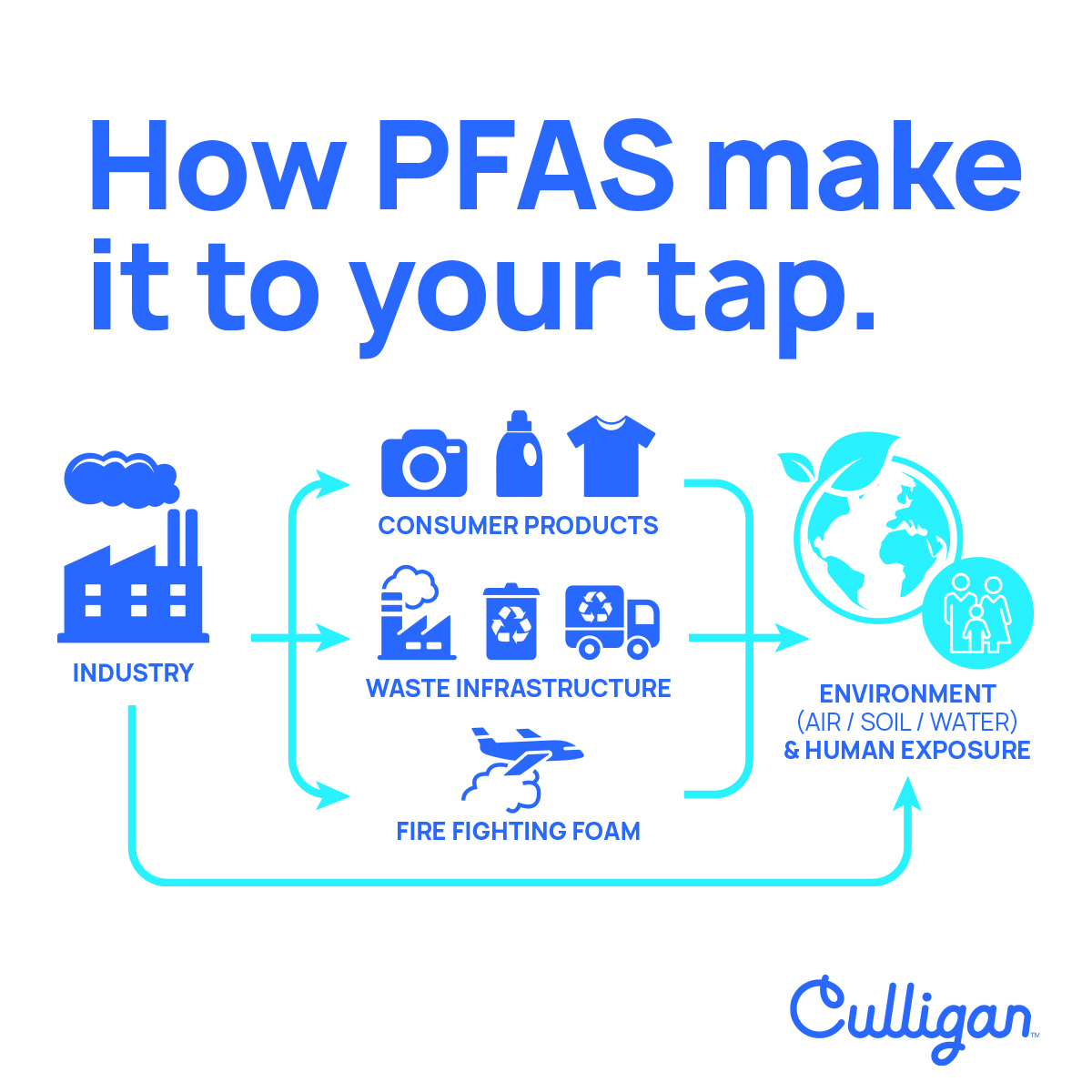
PFAS, often called “forever chemicals,” have been detected in water sources across the United States. These compounds are widely used in industrial and consumer products, and they do not break down easily in the environment.
Because of this, PFAS can enter groundwater, surface water, and eventually drinking water supplies.
Recent studies, including research from the U.S. Geological Survey (USGS), show that PFAS are more commonly detected in urban areas, but they can also be present in rural groundwater systems.
In West Central Missouri, groundwater is the primary source of drinking water. While PFAS levels are not listed in standard water quality tables, ongoing monitoring and updated EPA regulations continue to expand how these substances are tested and managed.
Why PFAS Can Be Present In Groundwater
PFAS contamination is typically linked to human activity rather than the natural water source itself.
Potential sources include:
- Industrial manufacturing and processing
- Firefighting foam used at training sites or emergency response locations
- Landfills and waste disposal sites
- Consumer products that break down over time
Because Sedalia relies on groundwater wells, contaminants like PFAS can enter aquifers through soil and remain present for long periods.
Even when municipal systems meet current standards, PFAS may still be a concern for homeowners who want more control over their drinking water.
How To Remove PFAS From Your Water
PFAS cannot be removed through basic filtration methods. More advanced treatment is required.
Effective options include:
- Reverse osmosis systems, which reduce PFAS and other dissolved contaminants at the tap
- Advanced carbon filtration, designed to target chemical compounds like PFAS
- Whole-home filtration systems, which provide broader protection throughout the house
These systems are designed to reduce contaminants at the point of use or throughout the home, depending on your needs.
Solutions
Suggested Products
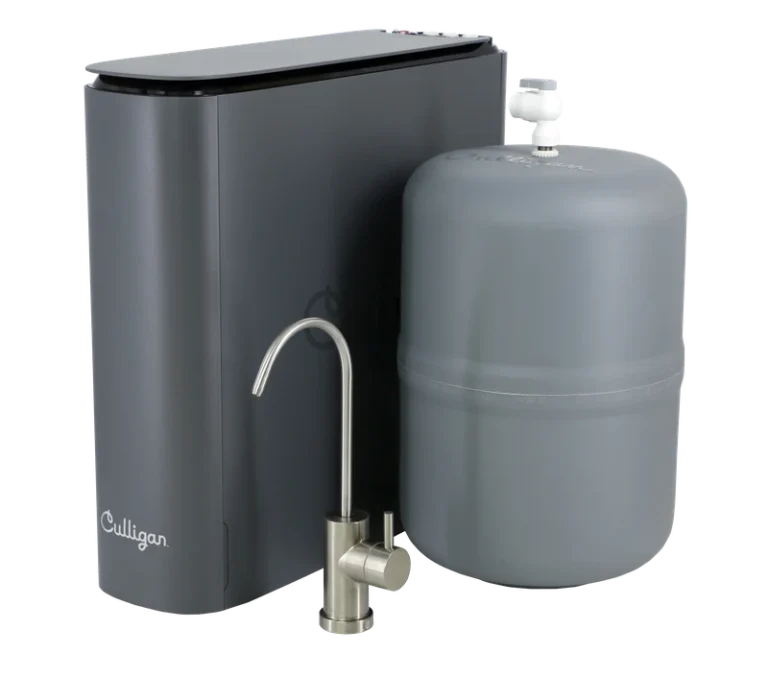
The Aquasential® Smart Reverse Osmosis Water Filter (RO)
- 2-in-1 sediment and carbon filter screens out sediment and particles, reducing elements that cause water to taste and smell unpleasant, including the taste and odor of chlorine.
- Reduces dissolved substances such as radium, arsenic V, and many others. Various capacity membranes available.
- Optional specialty filters available providing a range of benefits including pH balance or the reduction of additional substances such as VOC, pharmaceuticals and mercury.
- A second carbon filter ensures your drinking water is cleaner and fresh.
- Manifold assembly molded using SteriTouch® resin, the patented single manifold ensures reliability and houses four separate filters.
- Premium metal construction faucet has water quality alerts and filter life indicators in an easy to read display.
- Durable, high-quality jacketed steel tank.
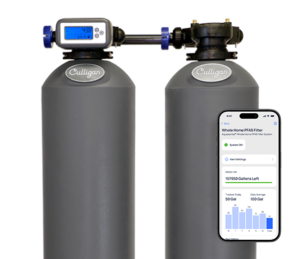
Aquasential® Whole House PFAS Water Filter
- Third-party certified to ANSI/NSF standards, the Aquasential® Whole Home PFAS Filter can reduce total PFAS by up to 99.9%.
- The PFAS filtration system operates effectively with minimal water pressure loss, even at higher flow rates.
- The built-in Smart Flow Monitor records the water treated by your system and calculates the remaining filter life, so you can always have the peace of mind that you’re getting optimal PFAS reduction.
- Easily check system performance, get alerts when filtration media needs to be changed, monitor water usage and set conservation goals using the Culligan Connect App right on your phone.
Why Choose Culligan To Help Reduce PFAS In Sedalia
Even though Sedalia’s water system meets current regulatory standards, many homeowners across West Central Missouri want added protection from emerging contaminants like PFAS.
Culligan of Sedalia takes a customized, in-home approach to water treatment, focusing on what is actually happening at your tap.
Culligan of Sedalia offers:
- Advanced reverse osmosis systems designed to reduce PFAS and other dissolved substances
- Whole-home filtration solutions for broader water quality improvement
- Free in-home water testing to identify potential concerns in your household water
Because PFAS are not always included in standard water reports, testing your water at home is the most reliable way to understand your exposure.
Culligan of Sedalia evaluates your water, explains your results clearly, and recommends solutions based on your home, your water source, and your preferences.
What About PFOA? Where Are They Found?
PFOA, the most notable substance of the PFAS family, was found to be a part of the manufacturing process of Teflon. The EPA sued DuPont in 2005 for failing to report a health risk to both humans and the environment. The company paid a $10.25 million settlement.
Because of PFOA and PFAS strong molecular structure, they take much longer to break down naturally than other organic chemicals.

Until 2002, PFOA were integral in producing goods which qualities repel dirt, grease, water and stains.
These contaminants can be found in the manufacturing process of a variety of products, including non-stick cookware, carpet-care liquids, treated apparel, upholstery or textiles, sealants, dental floss, floor wax and non-woven medical garments. Though PFTE non-stick cookware was proven to have PFOA levels, a recent study found levels that ranged from undetectable to 4.3 parts per billion, and it is not currently considered a major pathway for PFOA.
Just last year, United Nations experts recommended banning PFOA globally at the Stockholm Convention on Persistent Organic Pollutants. Will the United States follow suit based on recent outbreaks in Missouri and Michigan.
Problems with PFOA
According to a study from 2002-2005, people who lived in the PFOA-contaminated area around DuPont’s Washington Works facility were found to have higher levels of PFOA in their blood from drinking water. People that drank more tap water, ate locally grown fruits and vegetables, or ate local meat, were all associated with having higher PFOA levels.
Residents who used carbon filter systems had lower PFOA levels.” Studies have found that using carbon-activated filters can reduce PFOA by up to 60%.
Recommendations by the EPA
The EPA has issued a “Health Advisory” for PFOA and PFAS, but this does not amount to any actual forced federal regulations on municipalities to control and monitor them.
The EPA has established health advisory levels at 70 parts per trillion as of 2020.

How Much Is 70 Parts Per Trillion?
To compare 70 parts per trillion, think of a drop of ink in a backyard pool. According to its website, “EPA’s health advisory level for PFOA and PFOS offers a margin of protection for all Americans throughout their life from adverse health effects resulting from exposure to PFOA and PFAS in drinking water.”
A few of the adverse health conditions a lifetime of exposure can lead to are develop- mental effects in children, kidney and testicular cancer and immunodeficiency disorders.

Facebook